


Water Gone Wild – Where Water, Light and the Human Form Meet
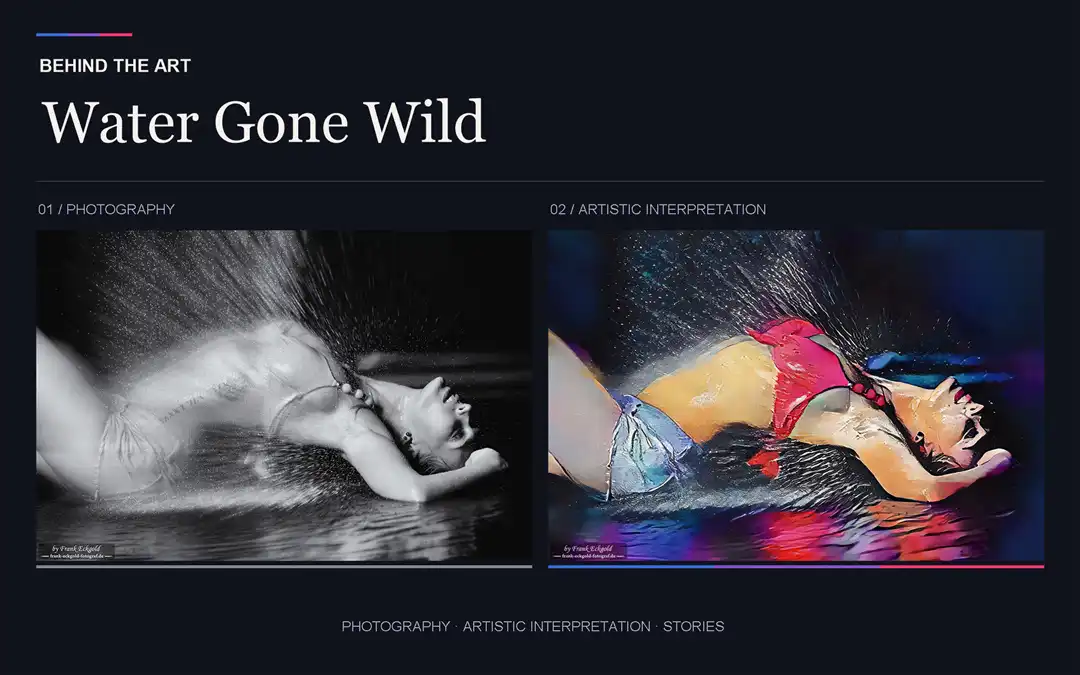
A new water tank, an exciting studio shoot with model Miriam and a photograph filled with energy. "Water Gone Wild" tells the story of the first real test of my second water tank and how a striking black-and-white photograph became a colourful Painterly interpretation, shifting the viewer's attention from the splashing water to the expressive lines of the human form.
31. October 2026
Some photographs begin with a spontaneous idea. Others are the result of years of experience and the desire to keep exploring new photographic possibilities.
"Water Gone Wild" definitely belongs to the second category.
The photograph was taken during a studio shoot with my model Miriam. It was also the very first practical test of my new water tank – a real baptism of fire for a project that incorporated everything I had learned from earlier shoots.
A New Water Tank, Years of Experience
With my first water tank, I had already explored a variety of photographic ideas and discovered both the creative possibilities and the challenges of working with water in a studio.
Those experiences became the foundation for my second tank. I wanted to expand my creative options while making the practical side of photo shoots and workshops easier to manage.
Water is a fascinating photographic element. Its surface can become a perfectly still mirror, reflecting people, light and shapes. A moment later, a single movement transforms it into a dynamic interplay of droplets, splashes and reflections.
It is precisely this contrast between stillness and movement that makes water so appealing to me as a photographer.
The First Real Test
The shoot with Miriam was the first opportunity to put the new tank through its paces.
And it wasn't just the tank itself that had to prove its reliability. The entire technical setup needed to work safely under real shooting conditions.
Working with larger amounts of water in a studio requires much more preparation than simply arranging the lighting and composition. Appropriate electrical safety measures, protective circuit breakers and reliable splash protection for the flash equipment were therefore essential parts of the preparations.
The creative freedom I hoped to gain from the new tank depended on a carefully planned technical foundation.
And then came the moment when all that preparation finally turned into photography.
When Water Takes Centre Stage
For "Water Gone Wild", Miriam reclined in shallow water while the movement of the surface created an extraordinary sense of energy.
Water splashed in every direction. Countless droplets and reflections scattered across the scene, creating patterns that could hardly be repeated in exactly the same way.
Of course, lighting, perspective and framing can be carefully controlled. But once water begins to move, an element of unpredictability enters the picture.
Every movement produces a different pattern. Every moment has its own rhythm.
You can create the conditions, but water always plays a part in shaping the final image.
The Power of Black and White Photography
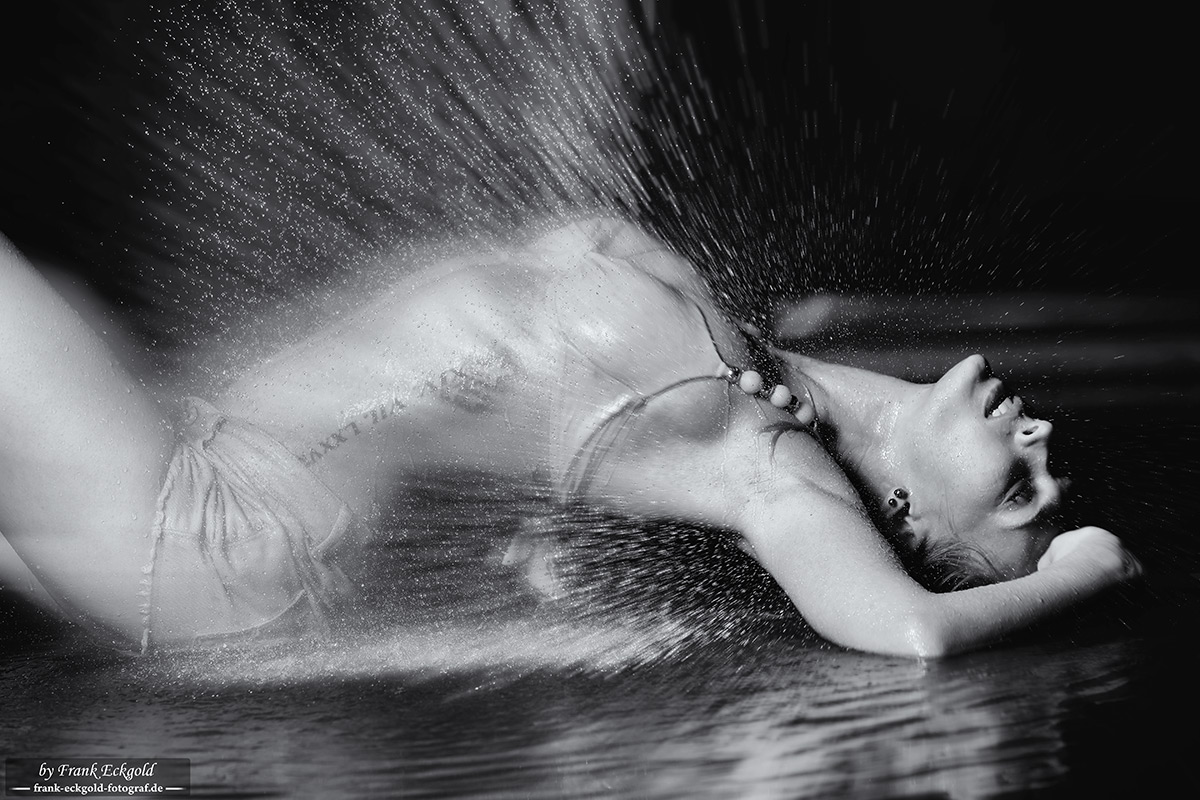
For the original photograph, I chose a black-and-white interpretation.
Without the distraction of colour, the movement of the water becomes the dominant visual element. Bright droplets stand out against the dark background, while the flash freezes their motion into delicate lines, sparkling highlights and almost explosive patterns.
Miriam's reclining pose and the flowing lines of her body provide a calm counterbalance.
The result is a fascinating interplay of stillness and energy, soft shapes and countless tiny reflections of light.
For me, this is what gives the original photograph its particular strength: the water is not simply part of the setting. It becomes the central creative element.
A Tank Full of Possibilities
After that first shoot, the water tank went on to become part of many other photographic projects.
Its versatility was particularly fascinating. Alongside dynamic images filled with splashing water, it also allowed me to create quiet compositions in which the water's surface acted as a mirror.
These reflections opened up entirely different possibilities for composition, creating unusual perspectives, shapes and symmetries.
The tank also became a recurring feature of my photography workshops. Participants could experience how dramatically the interaction of water, light and movement could transform an image.
Over time, the tank became much more than a piece of studio equipment. It was a versatile creative tool that inspired many different photographic ideas.
One Photograph, Two Stories
When I look at "Water Gone Wild" today, I see more than Miriam and the spectacular movement of the water.
I also remember developing the tank, drawing on everything I had learned and the satisfaction of seeing those new photographic possibilities work in practice.
When I later began exploring a Painterly interpretation, however, I wanted to emphasise a different aspect of the image.
While the splashing water attracts most of the attention in the original photograph, the artistic interpretation was intended to draw the viewer's eye more strongly towards Miriam and the shapes and contours of her body.
The water would remain part of the story – but it would no longer play the leading role.
When the Focus Shifts
Sometimes, a photograph doesn't need a new composition to create a completely different impression. All it takes is a shift in visual emphasis.
That was exactly my idea for the Painterly interpretation of "Water Gone Wild".
The original black-and-white photograph is driven by the energy of the water. Countless droplets, bright reflections and dynamic movement define the first impression.
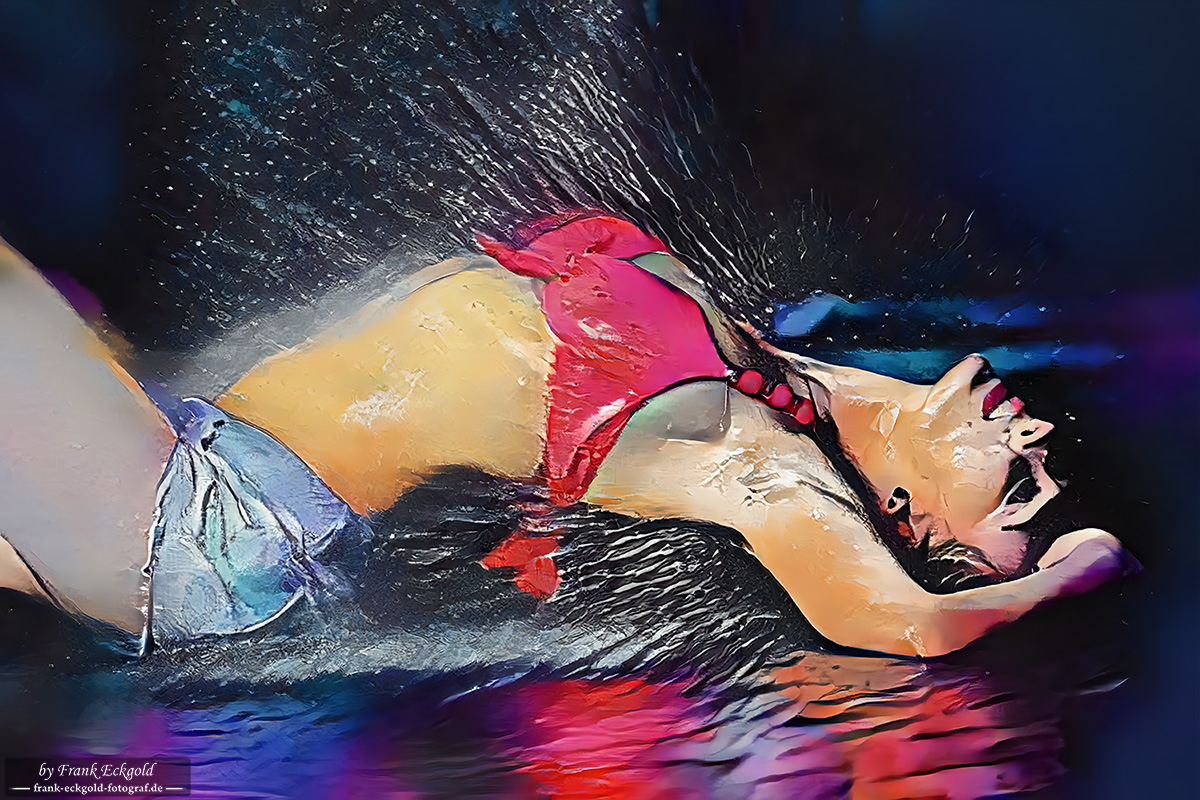
In the artistic interpretation, I wanted to soften that visual intensity and place greater emphasis on Miriam's pose, her contours and the expressive qualities of the human form.
Between Movement and the Human Form
The fundamental composition remains the same in both versions. Miriam reclines in the water, the lines of her body forming a gentle curve while the movement of the water surrounds her.
Yet the way we perceive the scene changes.
In the black-and-white photograph, our attention is immediately drawn to the bright splashes of water. The countless highlights create an almost explosive sense of movement.
In the Painterly version, these elements become less dominant. The human form takes on greater importance through the painterly treatment, while the water becomes an atmospheric part of the composition.
The original energy remains, but it no longer defines the entire image.
The Return of Colour
One of the most striking differences between the two works is the use of colour.
While the black-and-white photograph draws its strength from contrast and reflections, the Painterly interpretation introduces an intense and expressive colour palette.
The vibrant pink-red of Miriam's top creates a powerful focal point. Rich shades of blue and violet flow through the water, while warm skin tones provide a striking contrast.
The colours become particularly expressive in the reflections, where different hues blend into one another and give the scene an almost dreamlike atmosphere.
This creates a new visual balance: colour guides the viewer's eye along the contours of the body and across the moving water without completely dissolving the original sense of energy.
Colour becomes a creative element in its own right.
When Photography Becomes Painting
The Painterly interpretation also transforms the surfaces and textures of the original image.
Photographic precision gives way in places to a more painterly visual language. Skin, clothing and water take on visible textures reminiscent of expressive painting.
I find the contrast between the soft contours of the human form and the restless patterns of the water particularly interesting.
The outlines remain recognisable but become less photographically precise. Instead, there is a stronger emphasis on shape, light and areas of colour.
What began as a dynamic water photography session now moves closer to a painterly representation of the human body.
Two Interpretations of a Single Moment
The direct comparison reveals just how differently the same photograph can be experienced.
The black-and-white version tells a story of movement, energy and the interaction between water and light.
The Painterly interpretation focuses more strongly on the human form, the lines of the body and the expressive power of colour.
Both works originate from the same photographic moment. Yet they communicate two different visual ideas.
One is defined by the energy of the moment. The other invites a quieter contemplation of the human form.
From a Technical Idea to a Work of Art
For me, "Water Gone Wild" brings a particular creative journey full circle.
It began with the desire to explore new photographic possibilities using a second water tank. Planning, lessons learned from earlier shoots and finally the successful first session with Miriam followed.
The original photograph preserves one of those special moments when technology, lighting, movement and photographic composition come together.
Years later, it became the foundation for an artistic interpretation that explores the same moment from a different perspective.
And that is precisely what fascinates me about Behind the Art.
There is often much more behind a photograph than we see at first glance. Sometimes it is a personal encounter, sometimes an unusual location – and sometimes the story begins with a technical idea that eventually becomes a work of art.
Discover "Water Gone Wild" as Wall Art
The Painterly interpretation of "Water Gone Wild" is also available as Wall Art. Its vibrant colours, painterly textures and interplay of the human form and water give the artwork a distinctive presence.
What began as the first practical test of a new water tank developed into a photograph whose artistic interpretation reveals an entirely different side of the same moment.
Discover "Water Gone Wild" in my PICTRS Art Shop.
Explore more stories about the creation of my photographs and their artistic interpretations in my Behind the Art project.
Fine Art Editions
✦ Photography as art for distinctive spaces
Selected works from series such as The Darkness of Light, Face to Face and La Beauté du Ballet – complemented by graphic sketch interpretations based on my photographs.
PHOTORIA
✦ the magazine for fine art photography
Stories, imagery and inspiration about the art of photography.
PHOTORIA brings together authentic voices and atmospheric works from photographers and models worldwide.
Discover
Fragments of Silence
◆ Where Photographs Evolve into a New Visual Language
Not every photograph ends when the shutter is released. Fragments of Silence follows the journey of selected images as they gradually transform into artistic sketches and, ultimately, a Fine Art Book. Explore the creative process and discover how photography evolves into a quiet visual narrative.
👉 Follow the journey behind Fragments of Silence.
You Might Also Be Interested In…
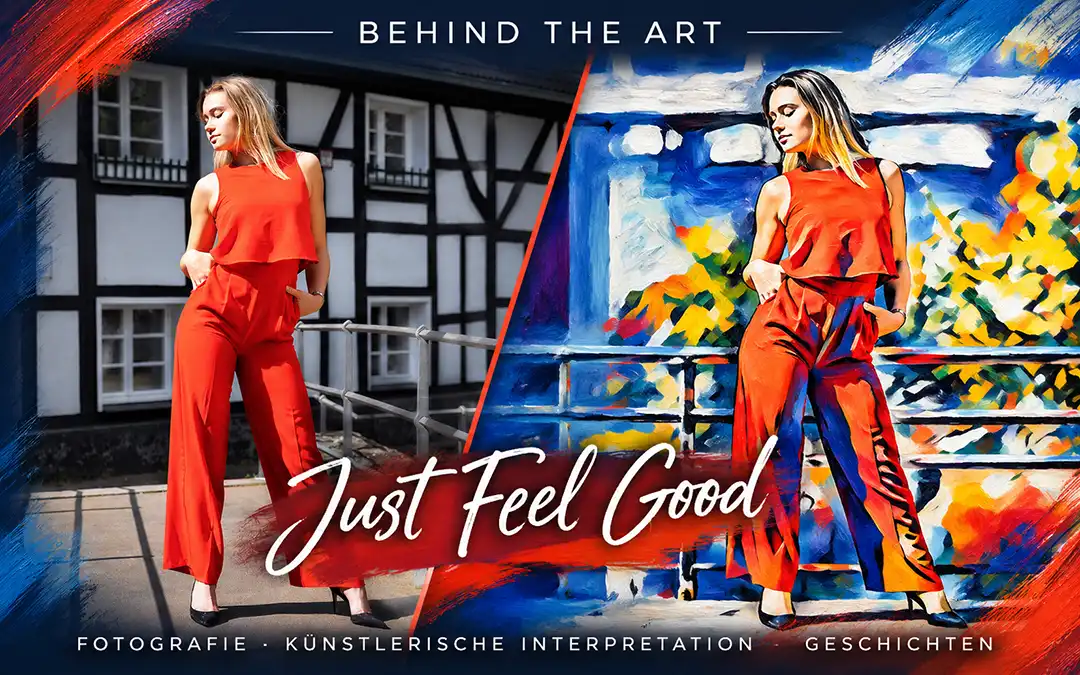
Just Feel Good – When Fashion and Location Don’t Quite Match
A late summer photography workshop in Herdecke’s historic old town, a modern fashion outfit and a location that didn’t quite match. “Just Feel Good” tells the story of how a spontaneous photograph of model Raffaela became an expressive Painterly interpretation, with a completely new urban environment inspired by the world of fashion shows.
A Walk in the Park – A Summer of Lightness
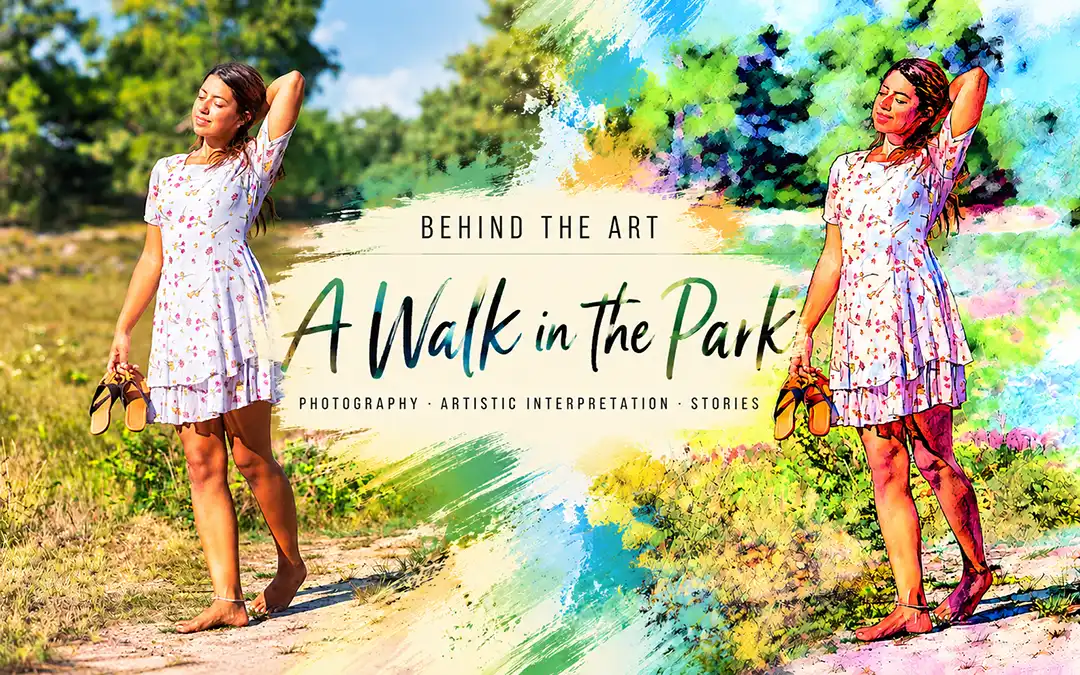
A warm summer day, an inspiring encounter with singer-songwriter Laura Alden and a moment filled with carefree joy. “A Walk in the Park” tells the story of a relaxed photo shoot in the summer of 2020 and how a vibrant Painterly interpretation brings the warmth, freedom and positive spirit of the original photograph to life in an entirely new way.

Beyond the Window – When a Studio Becomes Reality
An abandoned location? Not quite! “Beyond the Window” was photographed in a studio using a printed canvas backdrop. Perspective, framing, lighting and carefully chosen image development created a convincing illusion. The later Painterly interpretation transforms the dark atmosphere into a warm, sunlit scene.
Get in touch and let’s make something amazing together
Get in touch
Contact
Just send it
Phone
+49 (0)171 - 4100052
info@frank-eckgold-fotograf.de
Location
Dortmund, Germany
0 Comments