


Beyond the Walls – When Challenging Light Becomes Art

An unusual camera position, challenging basement lighting, and a surprising moment during a photography workshop at the Schwarze Kaue. "Beyond the Walls" was created with model Josephin as a demonstration of creative photographic possibilities. Years later, the original black-and-white photograph inspired a warm, expressive Painterly interpretation.
14. October 2026
Sometimes, the most interesting photographic possibilities are right in front of us. We simply need to learn how to recognise them.
"Beyond the Walls" was created during one of my photography workshops at a location known as the Schwarze Kaue in Germany's Ruhr region. Together with our model Josephin and the workshop participants, we explored a place that had far more to offer than its former miners' changing facilities.
The dimly lit basement rooms, in particular, offered fascinating photographic opportunities. Provided, of course, that you were willing to take a closer look.
Not Seeing the Wood for the Trees
My workshops were never just about learning how to operate a camera or apply a particular lighting technique. Helping participants develop their photographic eye was equally important to me.
After all, an interesting location does not automatically produce an interesting photograph. What matters is recognising its possibilities and finding creative ways to use them.
That day, my participants faced exactly this challenge. The basement rooms offered numerous intriguing perspectives, unusual textures, and interesting lighting conditions. Yet sometimes, as the saying goes, you cannot see the wood for the trees.
So I picked up my camera to demonstrate, through a few example photographs, the creative potential hidden in seemingly unremarkable corners of the location.
One of those photographs became "Beyond the Walls".
An Unusual Perspective
For this photograph, Josephin had taken a seat against an old brick wall. The available light fell across her body from the side, creating a quiet, almost contemplative atmosphere.
What made the photograph particularly interesting, however, was my camera position.
I was photographing through a metal grille that stood between me and the model. Yet in the finished image, it is practically invisible.
Thanks to the aperture I had chosen and the resulting shallow depth of field, the grille became so blurred that it almost disappeared from view. At the same time, this position allowed me to capture a perspective that would have been difficult to achieve from the other side.
My workshop participants were genuinely surprised when they saw the resulting photographs.
Moments like these were what made teaching photography so rewarding for me. Rather than simply explaining what might work in theory, I could demonstrate how an unconventional idea could lead to an interesting photograph.
When Available Light Becomes a Challenge
The lighting in this basement room also had its peculiarities.
The scene was illuminated by an old, dim light bulb shining through yellowed glass. Between the light source and Josephin, there was another cloudy window.
This combination produced an extremely difficult colour cast. Achieving a clean, natural-looking white balance under these conditions would have been far from straightforward.
For that reason, I deliberately chose to develop the photograph in black and white.
Without the distracting colour casts, I could concentrate on what truly defined the image: the light falling from the side, the gentle transitions between brightness and darkness, the texture of the old wall, and Josephin's relaxed, contemplative pose.
The result was a monochrome Fine Art photograph whose visual impact came not from colour, but from light, form, and atmosphere.
A Lesson Worth Remembering
For my participants, "Beyond the Walls" became an example of how photographic opportunities are not always immediately obvious.
A metal grille does not necessarily have to be an obstacle. A dark basement does not automatically make an unsuitable shooting location. And challenging light does not mean that an interesting photograph is impossible.
Sometimes, it is precisely these apparent limitations that encourage us to discover new perspectives.
For me, the photograph was therefore more than just a successful image. It also became a reminder of what mattered most in my workshops: experimenting, observing, understanding, and developing a more creative photographic eye along the way.


When Challenging Light Becomes Inspiration
When I later created the Painterly interpretation of "Beyond the Walls", something rather interesting happened: the very lighting conditions that had originally led me to develop the photograph in black and white now became an essential part of its artistic character.
The warm light filtered through old glass, which had caused such a difficult white balance in the original photographic setting, opened up an entirely different atmosphere in the painterly interpretation.
What would have appeared as distracting colour casts in the photograph became the foundation of a warm, almost golden visual world.
Between Light and Darkness
In the Painterly version, warm shades of yellow, ochre, and brown take centre stage.
The old brick wall loses some of its photographic precision and transforms into a surface of painterly textures, reflections, and soft transitions.
What I find particularly appealing is the contrast between the model's dark hair, the warmly illuminated areas of her skin, and the almost glowing background.
The light no longer seems merely to illuminate the scene. It becomes an essential part of the composition itself.
The original composition remains intact. Josephin's relaxed posture, her upward gaze, and the gentle lines of her body continue to define the character of the image.
A Painterly Interpretation with a Character of Its Own
Stylistically, "Beyond the Walls" combines Impressionist influences with a more expressive, Post-Impressionist-inspired visual language.
Contours partially dissolve, surfaces take on visible painterly textures, and the interplay of light and colour becomes increasingly important.
Unlike the black-and-white photograph, the emphasis is no longer primarily on the graphic relationship between light and darkness. Instead, a warm, almost intimate atmosphere emerges, bringing the model and her surroundings together in a unified painterly composition.
The sensual character of the original image remains, but through the artistic interpretation, it becomes even more closely connected to the overall mood of the scene.
Two Interpretations, Two Different Impressions
The direct comparison reveals just how differently the same subject can be perceived.
The black-and-white photograph draws its strength from a reduced visual language. Light and shadow shape the forms, the brick wall provides a textured background, and the model's quiet pose gives the image its distinctive intensity.
The Painterly interpretation places the emphasis elsewhere. It highlights the warmth of the light, the painterly textures, and the emotional atmosphere of the scene.
Neither version is intended to replace the other. They tell the same photographic story in different ways.
More Than a Memory of a Workshop
When I look at "Beyond the Walls" today, I remember more than Josephin, the old brick wall, or the unusual lighting conditions.
I also remember the surprised faces of my workshop participants when they discovered the photographic possibilities hidden behind an ordinary metal grille.
For me, the photograph therefore represents the joy of discovering new perspectives and sharing photographic knowledge and experience.
Years later, the Painterly interpretation added another dimension. One that demonstrates how even challenging lighting conditions can become an artistic strength when we look at a subject from a different perspective.
And that is precisely the idea behind Behind the Art: a photograph is more than its visible result. It carries the memories of its creation and, through a new artistic interpretation, can reveal another side of its story.
Discover "Beyond the Walls" as Wall Art
The Painterly interpretation of "Beyond the Walls" is also available as Wall Art. Its warm light, painterly textures, and quiet sensuality give the artwork a distinctive atmosphere.
Discover "Beyond the Walls" in my PICTRS Art Shop.
Discover more stories behind my photographs and their artistic interpretations in my Behind the Art project.
Fine Art Editions
✦ Photography as art for distinctive spaces
Selected works from series such as The Darkness of Light, Face to Face and La Beauté du Ballet – complemented by graphic sketch interpretations based on my photographs.
PHOTORIA
✦ the magazine for fine art photography
Stories, imagery and inspiration about the art of photography.
PHOTORIA brings together authentic voices and atmospheric works from photographers and models worldwide.
Discover
Fragments of Silence
◆ Where Photographs Evolve into a New Visual Language
Not every photograph ends when the shutter is released. Fragments of Silence follows the journey of selected images as they gradually transform into artistic sketches and, ultimately, a Fine Art Book. Explore the creative process and discover how photography evolves into a quiet visual narrative.
👉 Follow the journey behind Fragments of Silence.
You Might Also Be Interested In…

The Art of Falling Together – A Second Stage for Dance
A long-forgotten studio photograph of Katrin and Alexander, originally created to promote my wedding photography, finds a new stage many years later. “The Art of Falling Together” tells the story of a rediscovered photograph and its transformation into a painterly tribute to the elegance and lightness of dance.
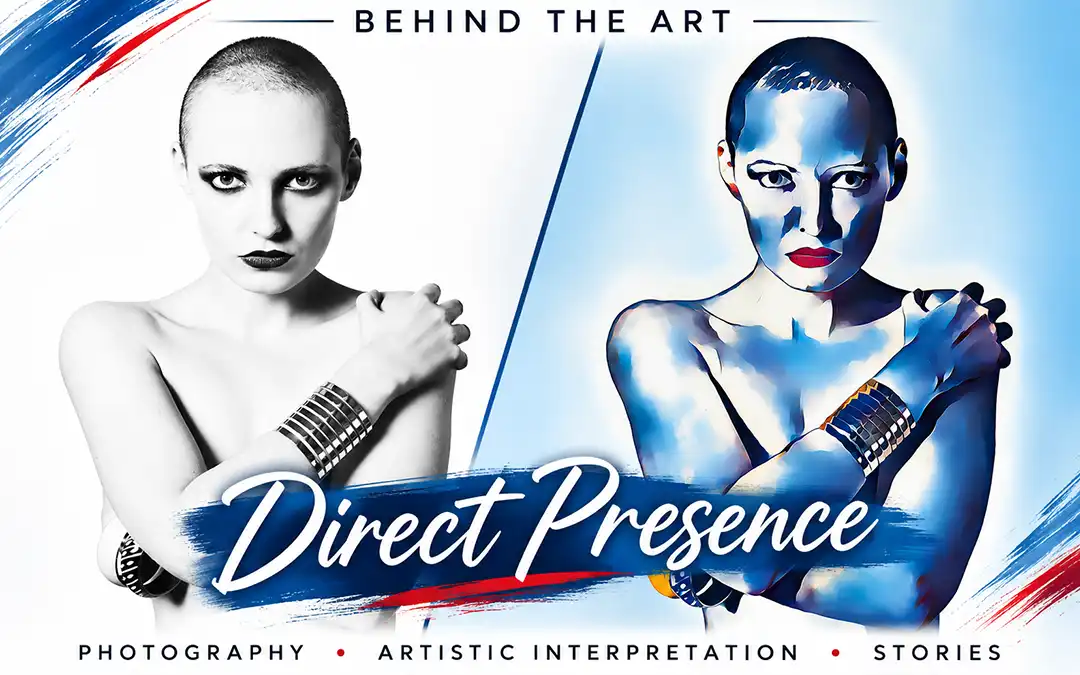
Direct Presence – When 30 Minutes Are Enough
An unexpectedly short casting session with Karolina from Prague, a single lighting setup and just 30 minutes to take the photographs. “Direct Presence” tells the story of a remarkably productive shoot and its later Painterly interpretation, in which a deliberately limited colour palette preserves the powerful presence of the original black-and-white photograph.
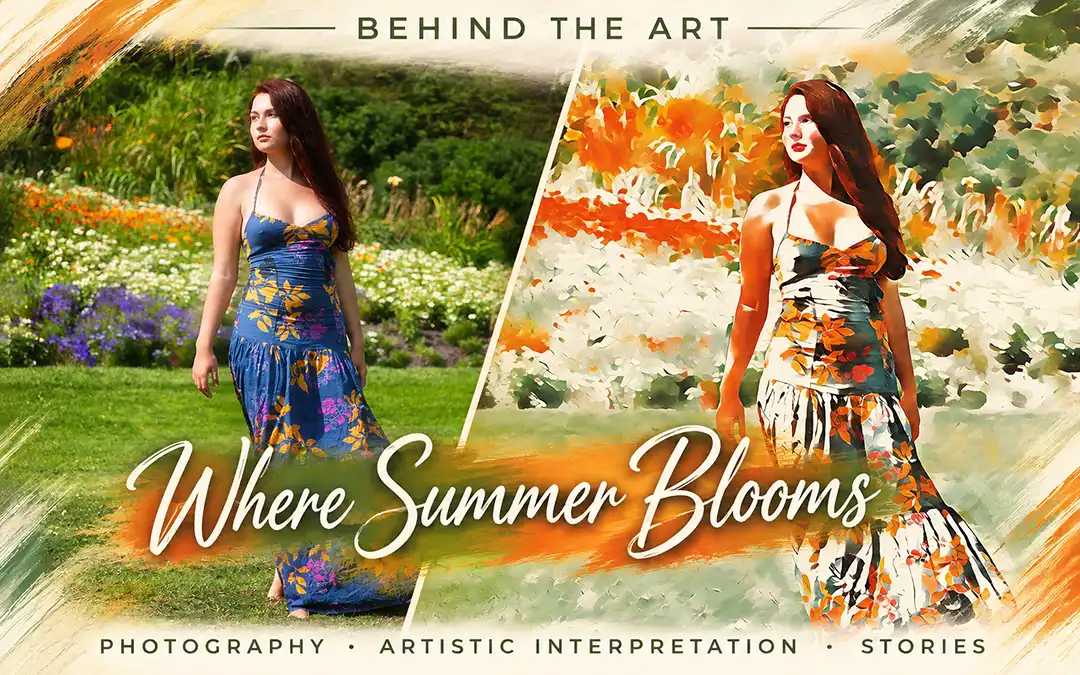
Where Summer Blooms – When a Stock Photo Becomes a Work of Art
A summer photo shoot with Marina at Westfalenpark Dortmund, originally created exclusively for stock agencies. Many years later, a simple editorial photograph becomes a soft, painterly interpretation. “Where Summer Blooms” tells the story of how a photograph moves beyond its original purpose and becomes a work of art in its own right.
Every great collaboration starts with a conversation
Get in Touch
Let’s Start a Conversation
Do you have a question, an idea, or would you like to work with me? I look forward to receiving your message and hearing from you.
Phone
+49 (0)171 - 4100052
info@frank-eckgold-fotograf.de
Location
Dortmund, Germany
0 Comments