


Rembrandt Lighting in Portrait Photography

The Rembrandt light is one of the most iconic lighting setups in Portrait photography. In this article, I’ll show you how to create the characteristic triangle of light, which light modifiers work best, and how to create atmospheric Portraits with character using both simple and advanced lighting setups.
29. December 2018
Rembrandt Lighting – Light with Character
Rembrandt lighting is one of the most iconic and effective lighting setups in Portrait photography. This distinctive lighting style was named after the Dutch painter Rembrandt Harmenszoon van Rijn (*July 15, 1606, †October 4, 1669), whose artworks are still admired today for their extraordinary use of light and shadow.
Rembrandt mastered the art of shaping light and darkness in a way that gave his portraits depth, atmosphere, and an almost tangible mood. The defining characteristic of Rembrandt lighting is the small triangle of light on the shadow side of the face, just beneath the eye. This tiny detail is what still makes the look unmistakable today — not only in painting, but also in modern Portrait photography.
What makes this lighting style so fascinating is the interplay between brightness and darkness. Large parts of the face remain in shadow, while carefully placed highlights guide the viewer’s attention. This dramatic yet natural effect is exactly why Rembrandt lighting remains so popular even today.
And that is precisely why this lighting style works perfectly for expressive Portraits full of atmosphere and character.

Rembrandt creator QS:P170,Q5598, Rembrandt Self-portrait (Kenwood), marked as public domain, details available on Wikimedia Commons.
If you look at Rembrandt’s classic paintings, you will immediately recognize this triangle of light. While one side of the face almost disappears into shadow, a small illuminated area remains visible beneath the eye. This detail creates the impressive depth and mood that became characteristic of his work.
Even in modern photography, this principle still works beautifully. Especially in emotional Portraits or LowKey photography, Rembrandt lighting creates an intense yet very natural atmosphere.
For my own example, I intentionally enhanced the contrast a little more. Strong shadows, controlled highlights, and of course the famous triangle of light on the cheek — perhaps even the old master himself might have appreciated it. 🙂

Example of Rembrandt’s characteristic triangle of light created with studio flash lighting in a photography studio.
If you look at Rembrandt’s classic paintings, you will immediately recognize this triangle of light. While one side of the face almost disappears into shadow, a small illuminated area remains visible beneath the eye. This detail creates the impressive depth and mood that became characteristic of his work.
Even in modern photography, this principle still works beautifully. Especially in emotional Portraits or LowKey photography, Rembrandt lighting creates an intense yet very natural atmosphere.
For my own example, I intentionally enhanced the contrast a little more. Strong shadows, controlled highlights, and of course the famous triangle of light on the cheek — perhaps even the old master himself might have appreciated it. 🙂
You can learn more about Rembrandt and his artworks on Wikipedia.
The Simple Lighting Setup
The great thing about Rembrandt lighting is that you don’t need a complicated studio setup. Even with just a single light source, you can create powerful and atmospheric Portraits.
For beginners, a Beauty Dish with a diameter of around 50–60 cm or an Octabox works perfectly. The light source is positioned slightly to the side of the model and raised above eye level. This creates the characteristic nose shadow that later forms the famous triangle of light.

Lighting setup for Rembrandt lighting.
This shadow is exactly what creates the well-known triangle of light on the shadow side of the face. Interestingly, the body position is far less important than the precise angle and tilt of the head. Even small movements can make the triangle appear perfectly — or disappear completely.
That’s why communication with your model is especially important here. Together, you need to find the perfect head position until light and shadow work together harmoniously.
For close-up Portraits like these, I personally enjoy using a 70–200 mm lens with a longer focal length. An aperture around f/8 also works beautifully. Of course, you can freely adapt these settings to your own visual style.
The following 3D views illustrate the position of the camera and the light source more clearly.

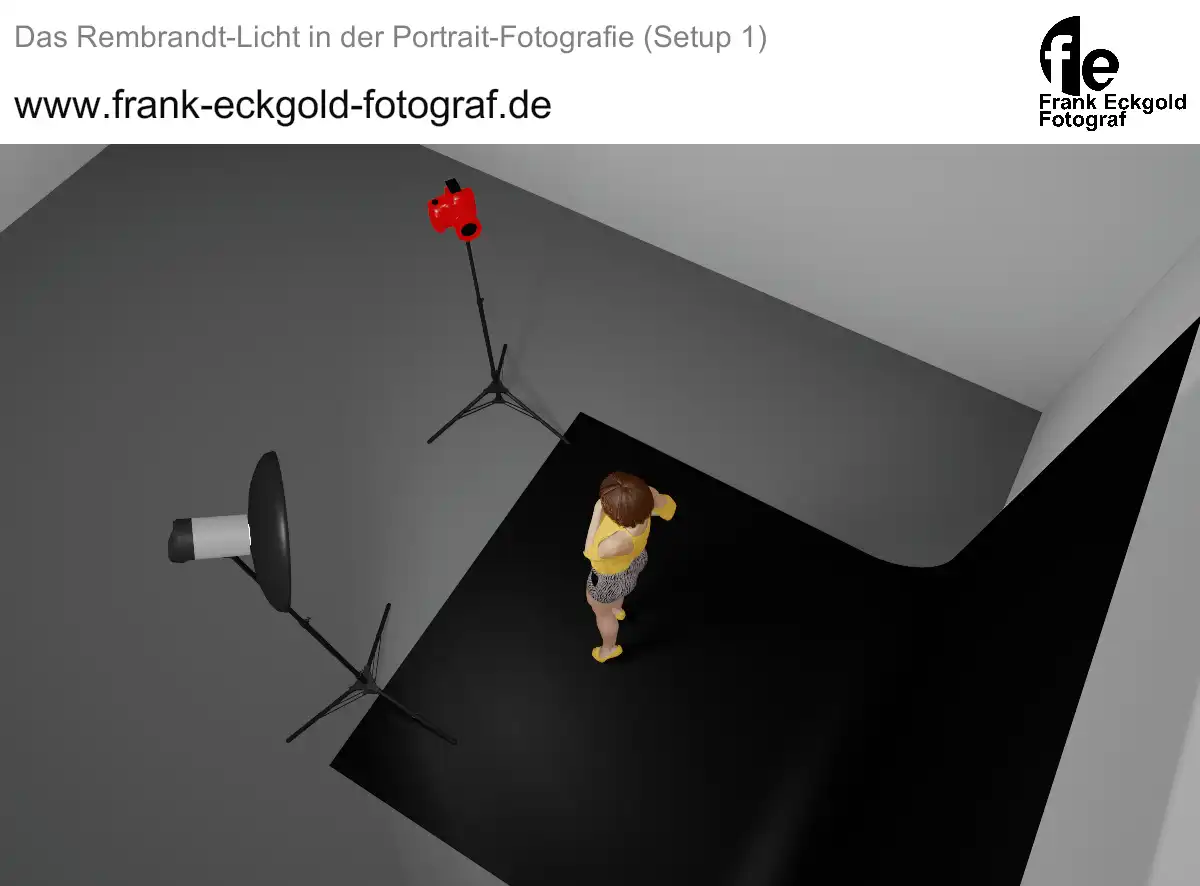
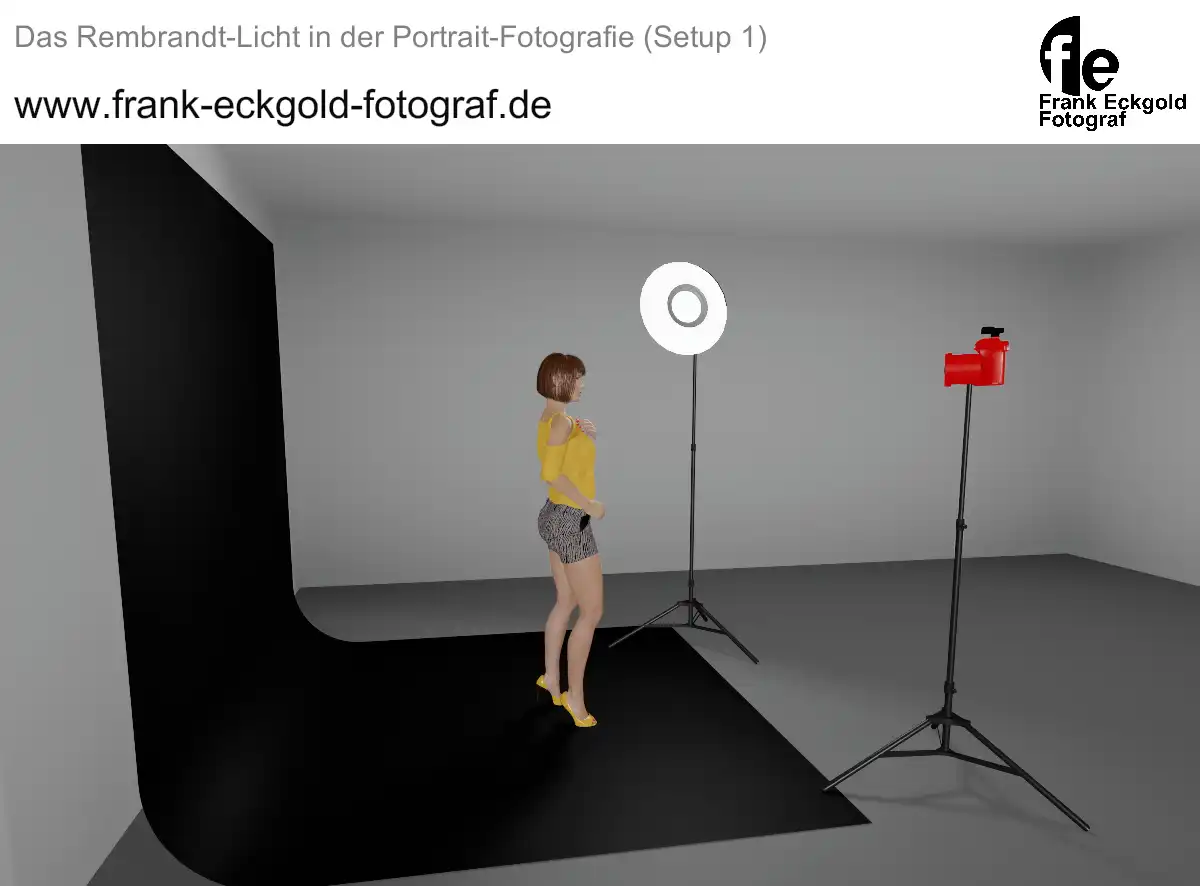
And this is how a Portrait with just a single light source can look.

Snapshot from the lighting setup for Rembrandt lighting.
The image above is a snapshot from set.a.light 3D V2.0, which I used to create this lighting setup. You can download the corresponding setup file here: Das-Rembrandt-Licht-1.set
Together with the software from set.a.light, you can view, modify, and expand the complete setup in 3D. It’s an incredibly useful tool for learning and experimenting with light.
Rembrandt Portraits often look especially dramatic when photographed from the shadow side of the face. But this is by no means a strict rule. Experiment with different perspectives and develop your own interpretation of this classic lighting style.
And because lighting always leaves room for creativity, let’s take a look at a second, more advanced setup.
Advanced Lighting Setup
For this advanced setup, you will need two striplights and a standard reflector with a grid. The background should be very dark or completely black to enhance the dramatic effect of the lighting.

Advanced lighting setup for Rembrandt lighting.
In this setup, camera settings, focal length, or aperture are far less important than the lighting itself. The direction and quality of light are what truly matter.
The striplight on the right acts as the main light and illuminates the model’s face and body. The striplight on the left is used more subtly as a fill light, especially for the hair and contours.
This combination creates a much more sculpted and dramatic look compared to the simple one-light setup.

Snapshot from the advanced lighting setup for Rembrandt lighting.
Once again, working closely with your model is essential. In addition to the pose, the exact position of the head determines whether the light falls correctly across the nose and forms the characteristic triangle on the cheek.
The model usually cannot judge this effect alone, so your guidance becomes extremely important. Small adjustments often make a huge difference.
Of course, I also prepared matching 3D views for this setup.

3D-Lichtsetup zum Rembrandt Licht
3D-Lichtsetup zum Rembrandt Licht

3D-Lichtsetup zum Rembrandt Licht
3D-Lichtsetup zum Rembrandt Licht

3D-Lichtsetup zum Rembrandt Licht
3D-Lichtsetup zum Rembrandt Licht
You can also download the setup file for this lighting arrangement here: Das-Rembrandt-Licht-2.set
I hope you enjoy experimenting with light, shadow, and Rembrandt’s famous triangle of light.
Fine Art Editions
✦ Photography as art for distinctive spaces
Selected works from series such as The Darkness of Light, Face to Face and La Beauté du Ballet – complemented by graphic sketch interpretations based on my photographs.
PHOTORIA
✦ the magazine for fine art photography
Stories, imagery and inspiration about the art of photography.
PHOTORIA brings together authentic voices and atmospheric works from photographers and models worldwide.
Discover
Fragments of Silence
◆ Where Photographs Evolve into a New Visual Language
Not every photograph ends when the shutter is released. Fragments of Silence follows the journey of selected images as they gradually transform into artistic sketches and, ultimately, a Fine Art Book. Explore the creative process and discover how photography evolves into a quiet visual narrative.
👉 Follow the journey behind Fragments of Silence.
You Might Also Be Interested In…
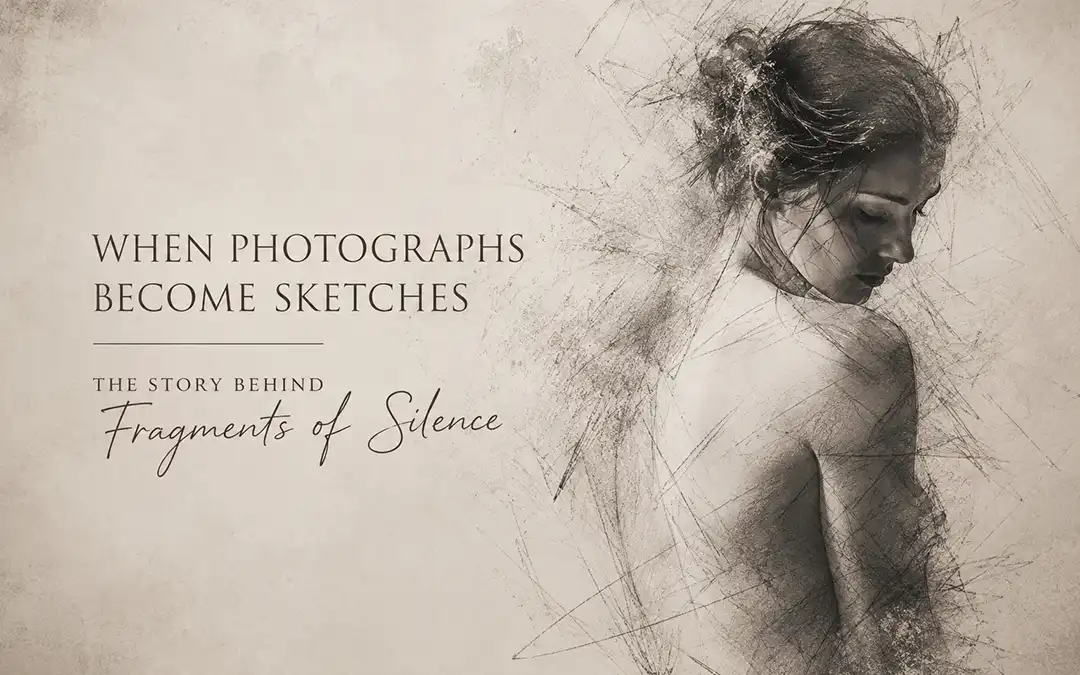
When Photographs Become Sketches – The Story Behind Fragments of Silence
When Photographs Become Sketches explores the story behind Fragments of Silence, an upcoming Fine Art Book where selected photographs evolve into artistic sketches through reduction, interpretation and visual storytelling.
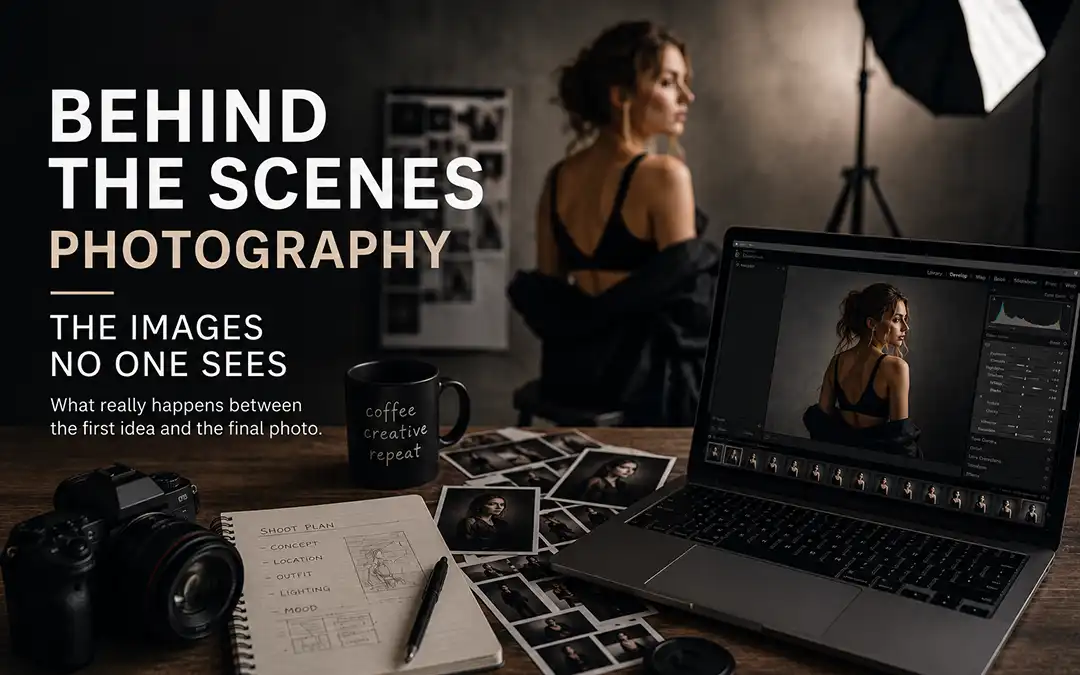
The Images No One Sees
A look behind the scenes of photography: why so much more happens between a photoshoot and the final image than most people ever see — from the first idea to image selection and post-processing.

TFP Shoots – Between Creative Freedom and False Expectations
TFP is one of the most misunderstood topics in people photography. This article takes an honest look at creative freedom, hidden time investment, fair collaboration and the false expectations that often surround TFP shoots.
Get in touch and let’s make something amazing together
Get in touch
Contact
Just send it
Phone
+49 (0)171 - 4100052
info@frank-eckgold-fotograf.de
Location
Dortmund, Germany
0 Comments