


The Images No One Sees
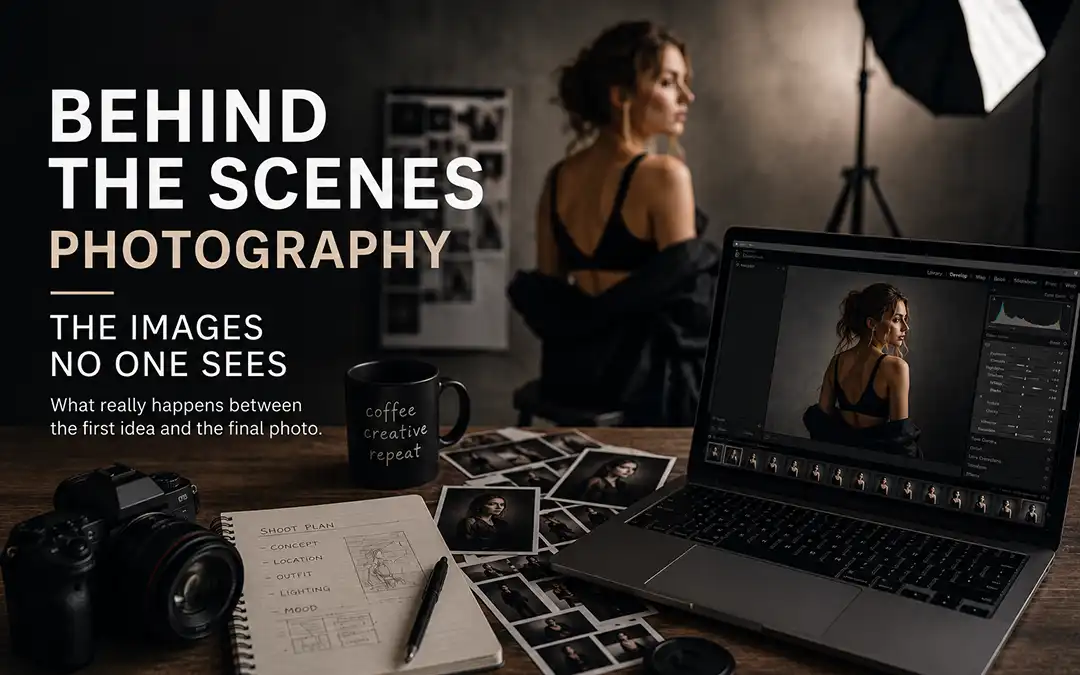
A look behind the scenes of photography: why so much more happens between a photoshoot and the final image than most people ever see — from the first idea to image selection and post-processing.
6. June 2026
Why So Much More Work Often Happens Between Pressing the Shutter and the Final Image Than Most People Realize.
Everyone sees the final image. The portrait on Instagram. The photograph on a website. The image in a portfolio or a magazine. What hardly anyone sees are the many hours before and after. The planning, the preparation, the discarded ideas, the selection process from hundreds of frames and the work behind a screen that sometimes transforms a good photograph into a remarkable image. This article takes you behind the scenes – to the place where photography begins long before an image is ever published.
The Moment Everyone Sees
An image is published. Perhaps on a website, in a portfolio, on Instagram or even in a magazine.
People see the finished result. They see the expression, the light, the atmosphere and sometimes even the story the image tells. What they do not see is the journey that led there.
Photography is often reduced to the brief moment when the shutter is released. In reality, that moment is usually only a small part of a much larger process.
Behind every published image are ideas, decisions, preparations and countless small details that remain invisible. Often, it is precisely these things that determine whether a photograph becomes something truly memorable.
The finished image is rarely the beginning of a story. More often, it is its visible ending – the part everyone gets to see.
The Ideas Before the First Photograph
Many photoshoots begin long before the camera is even taken out of the bag. Often it starts with nothing more than a thought, a mood or a visual idea that is still difficult to define.
It might be a particular quality of light, an interesting location, a specific outfit or simply the vision of an image that has been waiting to be created for a long time. From that first spark, a concept gradually begins to take shape.
Then come all the things that most people never notice: scheduling, location scouting, wardrobe choices, organizational details and, perhaps most importantly, communication between photographer and model. The more ambitious the project becomes, the more time is invested before the actual shoot ever begins.
Not every idea makes it to the final shoot. Some concepts are abandoned, others evolve or take unexpected directions. Creative work is rarely a straight line – and that is often what makes it so rewarding.
By the time the shooting day arrives, a significant part of the work has often already been completed. Invisible to everyone who later sees only the finished image.
Hundreds of Images for Just a Few
When viewing a finished gallery, an Instagram post or a magazine feature, people often see only a handful of carefully selected images. What is easy to forget is how many photographs came before them.
Depending on the shoot, several hundred images can be created. Not because photographs are taken randomly, but because expression, body language, light and countless other details change from frame to frame.
Sometimes a slight movement of the head, a different facial expression or a brief moment between poses is all it takes to transform a good photograph into the image that will eventually be published.
That is why the selection process begins after the shoot. Hundreds of photographs become dozens. Dozens become a small collection. In the end, only the images that best communicate the story, mood or concept remain.
Quality is not created by publishing as many photographs as possible. It comes from making thoughtful decisions about which images deserve to be seen – and which do not.
The Images That Are Left Behind
Not every photograph taken during a shoot makes it into the final selection. That does not mean those images are bad.
Very often, small details determine which image is ultimately chosen. A stronger expression, more flattering light or body language that better supports the intended atmosphere can make all the difference.
Some photographs are technically flawless but simply do not tell the story as effectively as others within the same series. Others fail because of tiny details that seem insignificant at first glance but become obvious when compared directly.
This is why image selection is far more than removing mistakes. It is a creative process built around a simple question: Which image communicates the idea most powerfully?
Many photographs disappear into the archive. Not because they failed, but because other images tell the story even better.
When the Real Work Begins
Once the shoot is over, the camera may be back in the bag, but the work is far from finished. In many cases, this is where the least visible part of the process actually begins.
The selected images are reviewed, developed and gradually shaped into the intended visual language. Light, contrast, color, skin tones and subtle details all influence whether an image merely looks good or truly carries the atmosphere that was created during the shoot.
Editing is not simply about applying a filter. It is a deliberate creative process that requires experience, patience and a clear vision.
Sometimes only subtle adjustments are needed. In other cases, an image evolves significantly during editing because its full potential only becomes visible on the screen.
That is why thoughtful post-processing takes time. It is not a technical afterthought to the photoshoot but an essential part of the photographic process itself.
The Photographs That Are Never Published
Beyond the images that are rejected during the selection process, there is another category entirely: photographs that were never intended for publication.
These include test shots, lighting setups, spontaneous experiments and ideas that appear during a shoot only to be abandoned moments later. Some seem insignificant, while others simply prove that the original concept did not work as expected.
Yet these photographs are often far more valuable than they appear. They help refine lighting, explore perspectives and push creative boundaries. Not every idea leads directly to success, but every experience contributes to future work.
Sometimes a failed experiment becomes the foundation for a new idea weeks or months later. Sometimes a simple test shot reveals a direction that would never have been discovered otherwise.
The images that no one ever sees are therefore far from meaningless. They are often an essential part of the creative process – the invisible steps leading to the photographs that eventually get published.
Every Image Has a Story Behind It
When a photograph is published, most people see only the final result. The light, the expression, the atmosphere and perhaps the story being told.
What remains invisible are the ideas, the preparation, the discarded concepts, the countless frames in between and the hours spent selecting and refining the final images. All the small decisions that gradually shape a photograph into what it eventually becomes.
That is why photography is about far more than the moment the shutter is pressed. It often begins long before and does not end until many hours – or even days – later.
The images that are published are ultimately only the visible tip of a creative process. Behind them are experiences, experiments, failed attempts, spontaneous ideas and, occasionally, a great deal of patience.
Perhaps that is exactly what makes photography so fascinating: every finished image tells not only the story of its subject, but also the story of its creation – even if that story remains invisible to most people.
The next images you see on a website, in a portfolio or on social media may feel a little different. Perhaps you will notice not only the finished photograph, but also the many invisible steps behind it.
Because every published image represents countless decisions, discarded ideas, creative experiments and many hours of work. It stands for all the photographs no one ever sees – and that nevertheless played their part in creating the one image that did.
Fine Art Editions
✦ Photography as art for distinctive spaces
Selected works from series such as The Darkness of Light, Face to Face and La Beauté du Ballet – complemented by graphic sketch interpretations based on my photographs.
PHOTORIA
✦ the magazine for fine art photography
Stories, imagery and inspiration about the art of photography.
PHOTORIA brings together authentic voices and atmospheric works from photographers and models worldwide.
Discover
Fragments of Silence
◆ Where Photographs Evolve into a New Visual Language
Not every photograph ends when the shutter is released. Fragments of Silence follows the journey of selected images as they gradually transform into artistic sketches and, ultimately, a Fine Art Book. Explore the creative process and discover how photography evolves into a quiet visual narrative.
👉 Follow the journey behind Fragments of Silence.
You Might Also Be Interested In…
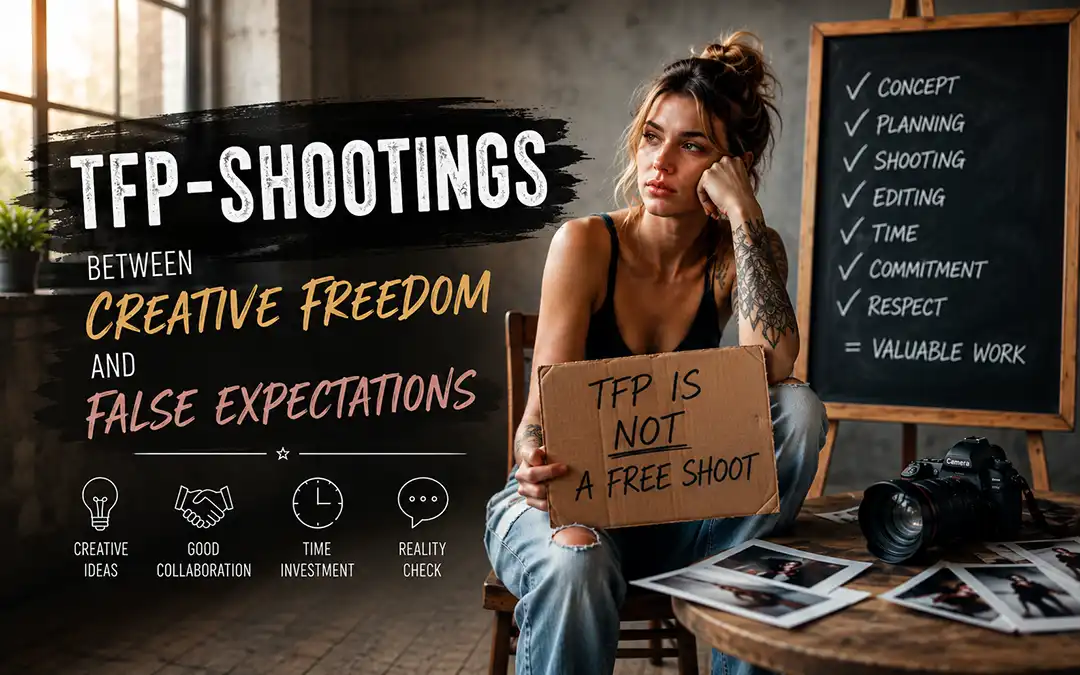
TFP Shoots – Between Creative Freedom and False Expectations
TFP is one of the most misunderstood topics in people photography. This article takes an honest look at creative freedom, hidden time investment, fair collaboration and the false expectations that often surround TFP shoots.

The Location Is Not the Star – Why Your Model Should Be the Focus
A great location can enhance a Portrait or Fashion shooting, but it should never take center stage. Learn why the person in front of the camera should remain the focus and how the environment can support the story instead of dominating it.

Why Photo Models Get More Clicks
Why do models often receive more clicks, likes, and comments than photographers — even when they share the exact same images? A closer look at visibility, emotional connection, community engagement, and what photographers can learn from it.
Get in touch and let’s make something amazing together
Get in touch
Contact
Just send it
Phone
+49 (0)171 - 4100052
info@frank-eckgold-fotograf.de
Location
Dortmund, Germany
0 Comments